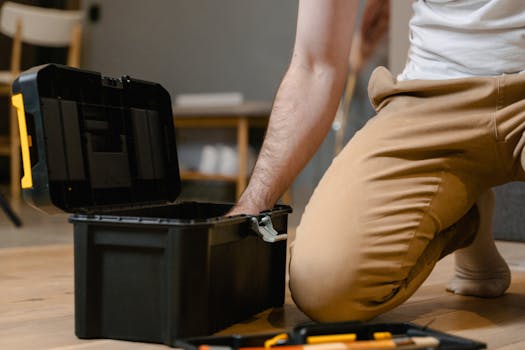

Have you ever stared at a leaky faucet, a loose cabinet hinge, or a picture that’s just begging to be hung, and felt that familiar pang of “I wish I knew what to do”? It’s a common sentiment. For many, the idea of home repair conjures images of overwhelming complexity and a daunting array of unfamiliar gadgets. But what if I told you that with a few key pieces of equipment, that daunting task transforms into a manageable, even satisfying, project? The secret, as it often is, lies in having the right allies by your side – the best tools for home repairs.
It’s not about owning a professional contractor’s entire arsenal; it’s about understanding the fundamental needs of your living space and equipping yourself with versatile, reliable items that can tackle the majority of everyday issues. Think of it as building a personal toolkit that empowers you, saves you money, and gives you the confidence to address those little annoyances before they become big problems. So, let’s dive in and explore what truly makes a collection of tools indispensable for any homeowner.
The Foundation: Essential Hand Tools That Can’t Be Ignored
Before we even think about power, let’s establish the bedrock of any repair endeavor: a solid set of hand tools. These are the unsung heroes, the workhorses that have been solving problems for centuries, and they remain absolutely crucial.
#### Hammer Time: More Than Just Hitting Nails
You might think of a hammer solely for pounding nails, and yes, it excels at that. But a good claw hammer is remarkably versatile. The claw end is invaluable for prying, whether you’re removing stubborn nails, separating stuck components, or even gently lifting floorboards. Look for a hammer with a comfortable, non-slip grip and a balanced weight – something that feels substantial without being unwieldy. In my experience, a 16-ounce hammer strikes a good balance for most common household tasks.
#### Screwdrivers: The Precision Players
A comprehensive set of screwdrivers is non-negotiable. You’ll need both flathead (or slotted) and Phillips head drivers, and critically, they should come in a range of sizes. Why? Because using the wrong size can strip the screw head, turning a simple fix into a frustrating ordeal. Beyond the basics, consider investing in a multi-bit screwdriver. These often contain interchangeable bits for various screw types, including Torx, hex, and square drives, making them incredibly space-efficient and adaptable.
#### Pliers: Gripping, Bending, and Cutting
Pliers are essentially an extension of your hand, offering superior grip and leverage. A good set typically includes:
Slip-joint pliers: For general gripping and bending.
Needle-nose pliers: Ideal for reaching into tight spaces, bending wire, and manipulating small objects.
Lineman’s pliers: A robust option for cutting wire, twisting, and gripping heavier materials.
These three types cover a vast majority of common tasks, from straightening bent nails to holding small nuts while tightening bolts.
#### Measuring and Marking: Accuracy is Key
You wouldn’t build a house without a tape measure, and you shouldn’t attempt even minor repairs without one either. A sturdy retractable tape measure, at least 15 feet long, is essential for everything from measuring for shelves to ensuring that your new artwork hangs perfectly straight. Alongside it, a pencil or carpenter’s pencil is vital for marking measurements, cut lines, or where you intend to drill.
Step Up Your Game: Power Tools That Empower
Once the hand tool basics are covered, it’s time to consider how power can make certain tasks quicker and more efficient. This is where the distinction between a casual DIYer and a more seasoned home repair enthusiast truly begins to blur.
#### The Cordless Drill/Driver: Your New Best Friend
If there’s one power tool that deserves a prime spot in any homeowner’s collection, it’s a cordless drill/driver. This is a true game-changer. It effortlessly drives screws, saving your wrist from fatigue, and with the right drill bit, it can bore holes through wood, plastic, and even some masonry.
When choosing a cordless drill, consider:
Voltage: Higher voltage (18V is common) generally means more power.
Battery Life: Look for models with good battery run time and consider getting a second battery so you can keep working while one is charging.
Features: Keyless chucks make bit changes simple, and variable speed settings offer control.
#### The Jigsaw: For Cuts with Curves
While a handsaw is fundamental, a jigsaw opens up a world of possibilities for cutting curves, shapes, and making intricate cuts in wood, laminate, and even thin metal. Its relatively small blade and maneuverability make it far more adaptable than a circular saw for many home repair scenarios. Learning to guide a jigsaw smoothly takes a little practice, but the results are often impressive.
Specialized Solutions for Common Annoyances
Beyond the broad categories, there are a few more specialized tools that can save you immense time and frustration when dealing with specific common issues.
#### The Utility Knife: The Master of Many Trades
A sharp utility knife, also known as a box cutter, is incredibly useful. From opening packaging and scoring drywall to trimming excess caulk or cutting carpet remnants, its precision blade can handle tasks that other tools simply can’t. Always ensure it has a secure blade-locking mechanism for safety.
#### The Level: Straightening Out Your World
Whether you’re hanging shelves, installing a new vanity, or ensuring a picture frame is perfectly aligned, a level is indispensable. You don’t need a professional-grade spirit level that spans several feet; a good torpedo level (around 9 inches) is perfect for most household applications, fitting easily into drawers and tackling tasks from cabinet installation to ensuring furniture sits flush.
#### Adjustable Wrenches: For Those Awkward Nuts and Bolts
While a socket set is fantastic for specific bolt sizes, an adjustable wrench (often called a monkey wrench) is incredibly handy for those times when you encounter nuts and bolts of varying sizes, or when you don’t have the exact socket required. It provides a secure grip and can be tightened or loosened to fit the fastener. Just be mindful not to overtighten, as they can sometimes mar surfaces if used carelessly.
The “Why” Behind the “What”: Investing in Quality
You might be tempted to grab the cheapest option for every tool. However, when it comes to the best tools for home repairs, investing in quality often pays dividends. A well-made tool feels better in your hand, performs more reliably, and, crucially, is safer to use. Cheap tools can have poor ergonomics, leading to fatigue and potential injury, and their performance can be so subpar that they create more problems than they solve.
Think about it: a poorly balanced hammer can lead to an accidental miss, and a cheap screwdriver can strip a screw so badly that you’ll need to resort to more drastic measures to remove it. These are precisely the kinds of frustrations we aim to avoid. Therefore, when selecting your toolkit, prioritize durability, good design, and the reputation of the brand for tools that will see regular use.
The Intangible: Knowledge and Practice
Perhaps the most important tool in your home repair arsenal isn’t made of steel or plastic. It’s the willingness to learn and the courage to try. With the right set of tools, you demystify the process. You gain the confidence to tackle that dripping tap, assemble that flat-pack furniture, or even hang a television on your wall.
The best tools for home repairs are those that empower you to become more self-sufficient. They are the enablers of small victories that build into a more confident and capable homeowner. So, start small, build your collection thoughtfully, and remember that every project is a learning opportunity. What will you fix first?
Wrapping Up: Building Your Confidence, One Tool at a Time
Navigating the world of home repairs doesn’t require a construction degree. It begins with understanding the core needs of your living space and curating a collection of the best tools for home repairs that address those needs effectively. From the fundamental reliability of a good hammer and screwdriver set to the efficiency boosters like a cordless drill and jigsaw, each tool plays a vital role in transforming daunting tasks into achievable projects. Remember, the initial investment in quality tools not only ensures longevity and performance but also enhances safety and reduces frustration. As you build your toolkit, you’re not just acquiring implements; you’re building your confidence and self-reliance. So, embrace the process, learn as you go, and enjoy the satisfaction of a job well done.